Tail Latency Might Matter More Than You Think
Tail Latency Might Matter More Than You Think
You’ve probably heard people say, "Yeah, our service usually responds in ~10ms, but sometimes it takes 100ms." That sometimes - that’s what tail latency is. It sounds like a small thing (just 1 in 1000 requests, right?) - but it’s actually a huge deal, especially when you’re working with microservices or any system with lots of service calls.
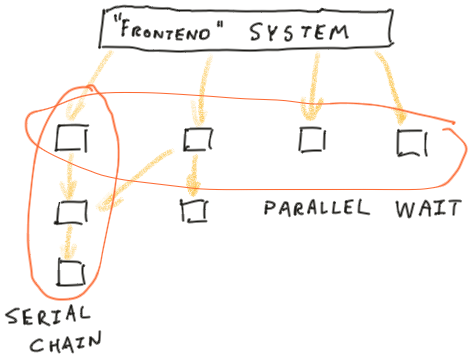
When you’re doing parallel fan-out, where one service calls many others at once, or serial chains, where one service depends on another and another... the probability that at least one of those calls will be slow shoots way up. In a fan-out with 10 services, the chance of hitting tail latency jumps from 1% to 10%. Add more services, and it snowballs. What was rare becomes normal - and that’s when users start getting frustrated.
Tail latency doesn't just increase the average wait - it increases the variance massively. In one example, it boosted variance by a factor of 25! That’s not a small fluctuation. That’s chaos in your response times.
If you're building or maintaining anything with multiple service calls, don’t ignore tail latency. It’s not a rare glitch. In complex systems, it's practically expected. And it's one of those things that can quietly erode user experience if you're not watching the right metrics.
Archive
2026
- 30 Sept 2026 Exercise as a system-wide software update for your body𝕏
- 28 Sept 2026 Agency Is the Most Valuable Employee Trait𝕏
- 25 Sept 2026 Why paper-filtered coffee may be better for cholesterol𝕏
- 23 Sept 2026 50 Mental Models Sorted by Popularity𝕏
- 21 Sept 2026 DeepSeek V4.1 Flash Hacked 11 of 11 Targets for $5𝕏
- 18 Sept 2026 OpenAI Moves Closer to Lawyers with Astra for Law𝕏
- 17 Sept 2026 Why reading to kids strengthens bonds and brain development𝕏
- 14 Sept 2026 How AI Is Changing Conway’s Law in Internal Software𝕏
- 11 Sept 2026 HIIT before stress may blunt the cortisol response𝕏
- 9 Sept 2026 OpenAI, Navier-Stokes, and the cost of huge AI agent swarms𝕏
- 7 Sept 2026 Google AI Mode favors trust over the cheapest price𝕏
- 5 Sept 2026 Optimizing for Different Risk Levels in Automation𝕏
- 2 Sept 2026 Why journaling reveals patterns you can’t see yourself𝕏
- 31 Aug 2026 Skipping breakfast, depression risk, and the HALT check𝕏
- 28 Aug 2026 Why meaning in life matters more than searching for it𝕏
- 26 Aug 2026 Why Short Videos Make It Hard to Stop Scrolling𝕏
- 24 Aug 2026 Lessons from Les Misérables for better business positioning𝕏
- 23 Aug 2026 A week using my custom social post tool𝕏
- 21 Aug 2026 Why Charging From Day One Reveals Real User Demand𝕏
- 19 Aug 2026 Watermark Models vs Rephrase Models𝕏
- 19 Aug 2026 Building a custom social tool with Next.js and SQLite𝕏
- 14 Aug 2026 Why a 7,000-Step Walk Can Help Mental Health𝕏
- 11 Aug 2026 Why AI Companies Will Have Fewer Managers and More Agents𝕏
- 5 Aug 2026 How AI Changes Shape Up and the Cool-Down Week𝕏
- 3 Aug 2026 Donald Hoffman on perception, consciousness, and reality𝕏
- 31 Jul 2026 Robust principles for small startups in a big world𝕏
- 29 Jul 2026 SEO Traffic Is Shrinking as AI Answers Change Search𝕏
- 29 Jul 2026 Selection bias in TrustMRR revenue data𝕏
- 27 Jul 2026 The 12-Factor Company in the AI Era𝕏
- 24 Jul 2026 AI Agents Will Become the Primary Users of Software𝕏
- 24 Jul 2026 Ask for ratings at the right moment𝕏
- 22 Jul 2026 Why I think we’re closer to the singularity than ever𝕏
- 20 Jul 2026 Building an iterative AI skill that learns across MCPs𝕏
- 20 Jul 2026 Expanding my MCP toolbelt with Google Play analytics𝕏
- 17 Jul 2026 Built a subscription system with Google Play and App Store𝕏
- 17 Jul 2026 Chinese AI models just overtook Claude in frontend coding𝕏
- 15 Jul 2026 Self-Compassion Beats the Inner Critic𝕏
- 10 Jul 2026 China’s rapid rise in space and global power𝕏
- 8 Jul 2026 Why virtual desktops are a game changer for multitasking𝕏
- 3 Jul 2026 Why Tech and Non-Tech People See AI So Differently𝕏
- 24 Jun 2026 Shut The Noise Off𝕏
- 12 Jun 2026 Why your content should live on your own site𝕏
- 8 Jun 2026 Built an MCP server for Reddit Ads API v3𝕏
- 7 Jun 2026 Why users don’t trust new apps: abandonment concerns𝕏
- 3 Jun 2026 AI Shipping Faster Than Learning: The Startup Trap𝕏
- 1 Jun 2026 Built an MCP server for Appfigures to track app performance𝕏
- 1 Jun 2026 The Verge Says WeWork Was a Joke Until SpaceX Filing𝕏
- 30 May 2026 Verge vs Elon Musk: Why SpaceX Isn’t a Meme Stock𝕏
- 30 May 2026 Journal + LLMs: Spot Patterns in Your Thinking Habits𝕏
- 30 May 2026 KidTeller AI Story Breakthrough From One Prompt𝕏
- 29 May 2026 Legacy code risk: the handover tax and key-person RISK𝕏
- 25 May 2026 How Repetition Shapes Learning From Hippocampus to Cortex𝕏
- 24 May 2026 How AI Coding Changed My MVP Build Process This Year𝕏
- 23 May 2026 Why Faster Project Updates Enable More SaaS and Apps𝕏
- 21 May 2026 Composer 2.5 tops CursorBench at 20x lower cost than Opus𝕏
- 20 May 2026 Procrastination Disguised as Research: Ship Decisions Faster𝕏
- 18 May 2026 China Deploys Medical AI at Scale in Real Hospitals𝕏
- 15 May 2026 How Losing a Senior Engineer Exposes Hidden System Knowledge𝕏
- 13 May 2026 Google Cloud growth outpaces AWS and Azure in AI race𝕏
- 11 May 2026 OpenAI GPT Goblins: How AI Behavioral Artifacts Scale𝕏
- 8 May 2026 Mozilla Used Claude to Find 271 Firefox Vulnerabilities𝕏
- 6 May 2026 The LLM Fallacy: AI Output Can Distort Self-Perception𝕏
- 1 May 2026 Make Your Future Self Feel Real to Stop Procrastinating𝕏
- 29 Apr 2026 Do We Know What Consciousness Is or If AI Can Be It𝕏
- 27 Apr 2026 Recursive Language Models: Why Bigger Context Can Hurt AI𝕏
- 24 Apr 2026 Anterior Mid-Cingulate Cortex: Discipline as Brain Training𝕏
- 22 Apr 2026 Why Learning Needs Friction in a Screen-Heavy World𝕏
- 20 Apr 2026 Reading as a Silence Problem: Focus, Time, and Advantage𝕏
- 17 Apr 2026 Automata vs Humans: Why 24/7 Consistency Wins𝕏
- 15 Apr 2026 AI-Driven Layoffs: Demand Shock and Automation Tax Debate𝕏
- 13 Apr 2026 Most AI adoption fails: executives trust, workers ignore𝕏
- 10 Apr 2026 AI Zen Sickness: When AI Outthinks Your Ego𝕏
- 8 Apr 2026 You Don’t Need a Co-Founder: Equity, Hiring, and AI𝕏
- 6 Apr 2026 How Liquid Death Uses Humor to Build a Brand Moat𝕏
- 3 Apr 2026 AI Replaces Managers: A New Coordination Layer𝕏
- 1 Apr 2026 Beginner Mindset and Tiny Docs for AI Engineering𝕏
- 30 Mar 2026 Why Jira Isn’t Enough: Shared Context Beats Tickets𝕏
- 27 Mar 2026 Dev Browser Cuts Turns and Tokens for Faster AI Coding𝕏
- 25 Mar 2026 Bezos’ $100B AI Plan to Upgrade Factories and Manufacturing𝕏
- 23 Mar 2026 AI Remixing Live: How Models Distill and Route Calls𝕏
- 20 Mar 2026 AI Will Concentrate Value Through Distribution, Not Fragment Markets𝕏
- 18 Mar 2026 Could This Be the Last Job? AI, Identity, and Anxiety𝕏
- 16 Mar 2026 Fruit Flies as Model Organisms: Virtual Fly Brain Loop𝕏
- 13 Mar 2026 AI chatbots and delusions: confirmation bias spiral𝕏
- 11 Mar 2026 Why “Goals” Fail: Use Few, Clear, Owned Priorities𝕏
- 9 Mar 2026 AI founders fear startups becoming features𝕏
- 6 Mar 2026 AI Era Startup Defensibility: Features Get Cloned𝕏
- 4 Mar 2026 AI reasoning models show System 1 vs System 2 collapse𝕏
- 2 Mar 2026 Startups Now “Wrap” APIs: The Shift from Building to Composing𝕏
- 27 Feb 2026 Why Tests and Docs Are the New Moat𝕏
- 25 Feb 2026 GIFs, Photos, and 10,000-Year Storage Thanks to Microsoft𝕏
- 23 Feb 2026 ADHD Traits as a Creative Advantage, Not a Deficit𝕏
- 20 Feb 2026 Taste Is the New Core Skill in the Age of AI𝕏
- 18 Feb 2026 Zhiyuan Robotics Expedition A3: Humanoid Robot Scale Up𝕏
- 16 Feb 2026 LLMs as amplifiers: how experts verify science in 12 hours𝕏
- 13 Feb 2026 LLM “Thinking” Explained: More Compute, Chain-of-Thought Limits𝕏
- 11 Feb 2026 AI Gets 50–60% on New Research Math Benchmarks𝕏
- 9 Feb 2026 Humanoid robots: China dominates with the EV-style playbook𝕏
- 6 Feb 2026 How LLMs Kill the Workflow Interface Moat𝕏
- 4 Feb 2026 Built a custom CRM for my wife in two days𝕏
- 2 Feb 2026 LLMs Make Code Cheap: Clarity and Accountability Win𝕏
- 30 Jan 2026 AI Makes Junior Dev Work Faster but Raises the Bar𝕏
- 28 Jan 2026 Why I Love Claude More Than the Marketing Hype𝕏
- 26 Jan 2026 AI Index 2025: efficiency drives progress and global shift𝕏
- 24 Jan 2026 Cursor Fixed ChordIQ and Migrated Apps After Google Takedown𝕏
- 23 Jan 2026 Fix this gene𝕏
- 21 Jan 2026 Space Race 2.0: China Plans Up to 200,000 Satellites𝕏
- 20 Jan 2026 Fear to Launch: KidTeller’s First Customer and Rapid Fixes𝕏
- 19 Jan 2026 AI Human Bottleneck: Orchestration Beats Execution𝕏
- 16 Jan 2026 Why teams win with AI: context is the real moat𝕏
- 14 Jan 2026 Stack Overflow’s AI push doubles revenue to $115M𝕏
- 13 Jan 2026 Choosing Curiosity Over Fear: Turn Ideas Into Projects𝕏
- 9 Jan 2026 Quantum computing and public-key encryption risks explained𝕏
- 9 Jan 2026 Why I Chose Curiosity Over Fear
- 9 Jan 2026 Marketing Mindset Shift for Developers: 1/10 Build, 9/10 Sell𝕏
- 7 Jan 2026 Solo founders are up in 2025, boosted by AI and speed𝕏
- 5 Jan 2026 2026: Org Process Determines Speed as AI Writes Code𝕏
- 4 Jan 2026 Stack Overflow Questions Drop as LLMs Take Over Coding𝕏
2025
- 31 Dec 2025 How Josh Woodward Helped Google Maintain Dominance𝕏
- 29 Dec 2025 Token-Efficient Vibe Coding: Metrics for LLM Developer Work𝕏
- 28 Dec 2025 Real AI Progress Starts With Curiosity, Not Mandates𝕏
- 26 Dec 2025 AI Visual Editing and the Split Between Programming and Coding𝕏
- 24 Dec 2025 ASML Engineers, EUV Chipmaking, and China’s Progress Timeline𝕏
- 24 Dec 2025 KidTeller Feedback Loop to Product-Market Fit𝕏
- 22 Dec 2025 OpenAI Cash Burn and Why Gemini or China Could Win𝕏
- 21 Dec 2025 AI Coding 2025 Report Finds 76% Jump in Code Output𝕏
- 19 Dec 2025 KidTeller usability update adds character preview and first page𝕏
- 17 Dec 2025 Google Puts AI in Orbit as Starcloud Runs Gemma in Space𝕏
- 15 Dec 2025 YC’s Startup Success Questions: Determination Wins𝕏
- 14 Dec 2025 Musk and Bezos Race to Put AI Data Centers in Space𝕏
- 12 Dec 2025 What If AGI Never Happens: GPU Limits, Memory, Scaling Costs𝕏
- 10 Dec 2025 Vercel cut 9 SDRs to 1 with AI QA agent in 6 weeks𝕏
- 8 Dec 2025 From Chatbots to AI Agents: OpenRouter’s Agentic Shift𝕏
- 7 Dec 2025 Transparent Leadership: The Router Model for Building Teams𝕏
- 6 Dec 2025 Trying Antigravity: Gemini 3 demand vs Claude speed𝕏
- 3 Dec 2025 Technical Deflation: Why Projects May Never Start𝕏
- 1 Dec 2025 AI “Vibe-Coded” SaaS Wipes a Team, Leaves Legal Risks𝕏
- 30 Nov 2025 Charlie Munger Lessons on Curiosity, Risk, and Long-Term Thinking𝕏
- 28 Nov 2025 MIT Study Finds AI Could Replace 11.7% of US Workforce𝕏
- 27 Nov 2025 AI agents are making experienced builders far more productive𝕏
- 24 Nov 2025 Inside Cursor's Culture, Hiring, and Product Bar𝕏
- 23 Nov 2025 AI-generated songs on Spotify are growing fast𝕏
- 19 Nov 2025 KidTeller launches on Product Hunt with personalized kids stories𝕏
- 17 Nov 2025 Chat Control Returns With Mass Message Scanning𝕏
- 16 Nov 2025 The Complete Guide to Stoicism Felt Strangely Familiar𝕏
- 14 Nov 2025 How LLMs Separate Memorization from Reasoning𝕏
- 12 Nov 2025 Architectural debt starts outside the code𝕏
- 10 Nov 2025 KidTeller: Personalized Storybooks for Kids𝕏
- 9 Nov 2025 The platypus is venomous and its sting is brutal𝕏
- 7 Nov 2025 Chinese Open-Source Models Are Surging Ahead𝕏
- 7 Nov 2025 Book: The Complete Guide to Stoicism
- 5 Nov 2025 AI video tools may flood social feeds with spam𝕏
- 3 Nov 2025 Why busyness became a religion𝕏
- 2 Nov 2025 Human Creativity Meets AI in a Short Film𝕏
- 31 Oct 2025 Hidden value systems in AI models reveal surprising biases𝕏
- 27 Oct 2025 Artificial cognitive selection and the future of embryo IQ testing𝕏
- 26 Oct 2025 Anathem and the problem of good crap𝕏
- 20 Oct 2025 Rude prompts may improve LLM accuracy𝕏
- 17 Oct 2025 Why great writing feels alive and AI writing feels flat𝕏
- 15 Oct 2025 AI Agents Replace B Players, Not A Players𝕏
- 13 Oct 2025 Ahrefs SEO Competitor Analysis Tips for Reverse Engineering𝕏
- 12 Oct 2025 Wandering Is Not Procrastination𝕏
- 12 Oct 2025 Why Writing Thoughts Down Helps Your Brain Relax𝕏
- 10 Oct 2025 Using ChatGPT for Competitive Analysis in News SEO𝕏
- 8 Oct 2025 a16z Enterprise on the AI-native apps startups are buying𝕏
- 7 Oct 2025 Why developers should understand how things work conceptually𝕏
- 7 Oct 2025 Why candidates should complete a simple coding task first𝕏
- 6 Oct 2025 SIM cards are tiny microcontrollers𝕏
- 6 Oct 2025 Why China May Lead the Next AI Breakthrough𝕏
- 3 Oct 2025 Governments Push More Device-Level Content Scanning𝕏
- 1 Oct 2025 OpenAI Scores 12 of 12 at the 2025 ICPC World Finals𝕏
- 30 Sept 2025 Why ChatGPT is for rare bug fixes, not speed𝕏
- 29 Sept 2025 Google reports devs use AI for 2 hours a day𝕏
- 26 Sept 2025 How leverage amplifies results in the AI era𝕏
- 24 Sept 2025 Building a High-Performance Organization𝕏
- 24 Sept 2025 Nietzsche, walking, and the making of Thus Spoke Zarathustra𝕏
- 22 Sept 2025 OpenAI study shows how people use ChatGPT in 2025𝕏
- 19 Sept 2025 Google’s AP2 Lets AI Agents Complete Payments Securely𝕏
- 17 Sept 2025 AI Breakthroughs Keep Coming From New Data Sources𝕏
- 17 Sept 2025 Drinking Water During Meals Doesn’t Harm Digestion𝕏
- 17 Sept 2025 EU Chat Control Law Threatens Private Messaging𝕏
- 15 Sept 2025 Gen Z Is Using TikTok Search Nearly as Much as Google𝕏
- 14 Sept 2025 Goals vs aims and why identity matters𝕏
- 12 Sept 2025 OpenAI launches AI Academy with free ChatGPT courses𝕏
- 10 Sept 2025 The most ridiculous AI implementation fails𝕏
- 8 Sept 2025 Why Hybrid Agents May Beat Bigger Models𝕏
- 3 Sept 2025 Precognition and the possibility that time is not linear𝕏
- 1 Sept 2025 Sell the team, not just the tool𝕏
- 29 Aug 2025 Why a sharp economic downturn could hit within months𝕏
- 25 Aug 2025 AI abundance and the real challenge of sharing it𝕏
- 22 Aug 2025 ChatGPT referral traffic is shifting toward answer-first content𝕏
- 18 Aug 2025 The Region Beta Paradox and Why Mild Pain Delays Action𝕏
- 13 Aug 2025 Why AI Shouldn’t Replace Your Thinking𝕏
- 12 Aug 2025 In the long run, LLMs make us dumber
- 11 Aug 2025 Stanford Study Shows AI Boosts Simple Coding, Not Complex Systems𝕏
- 8 Aug 2025 AI Is Eating the Internet and Changing Content Distribution𝕏
- 6 Aug 2025 Money Creation, Credit, and Asset Bubbles Explained𝕏
- 4 Aug 2025 AI Gold Rush May Be Peaking as VC Money Floods In𝕏
- 1 Aug 2025 Why Great Engineers Step Away From the Keyboard𝕏
- 30 Jul 2025 Frustration over ChatGPT invoice emails for accounting𝕏
- 29 Jul 2025 Why solo builders obsess over tiny product details𝕏
- 28 Jul 2025 How AI Is Helping Design Better Physics Experiments𝕏
- 25 Jul 2025 AI summaries are changing how people search𝕏
- 20 Jul 2025 AI-first pods are rewriting traditional IT services𝕏
- 18 Jul 2025 Mars as a Plan B for Humanity𝕏
- 14 Jul 2025 How the smartest founders are winning in AI𝕏
- 13 Jul 2025 AI talent wars are all about keeping top researchers𝕏
- 11 Jul 2025 Isomorphic Labs is launching human trials of AI-designed drugs𝕏
- 8 Jul 2025 Road to AGI
- 7 Jul 2025 Tail Latency Might Matter More Than You Think𝕏
- 6 Jul 2025 AI talent war heats up as bubble fears grow𝕏
- 4 Jul 2025 Context Engineering Is Replacing Prompt Engineering𝕏
- 2 Jul 2025 Amazon’s Warehouse Robots Signal the Need to Keep Learning𝕏
- 30 Jun 2025 How AI models behave in Diplomacy𝕏
- 29 Jun 2025 Sukunaarchaeum: the microbe that behaves like a virus𝕏
- 27 Jun 2025 Why lines of code are a meaningless productivity metric𝕏
- 25 Jun 2025 How ChatGPT May Be Training Us to Think Less𝕏
- 23 Jun 2025 Publishers Face the Post-Search Era as AI Cuts Traffic𝕏
- 22 Jun 2025 AI Video Could Make Learning Stick for Kids𝕏
- 20 Jun 2025 Sam Altman on AGI, ChatGPT, and chaotic leadership𝕏
- 18 Jun 2025 Why GenAI coding tools help me but still need careful review𝕏
- 17 Jun 2025 Stripe’s early wall after wall and the API outage nobody noticed𝕏
- 15 Jun 2025 How AI Helped a Founder Fight a 2-Year Legal Nightmare𝕏
- 13 Jun 2025 Japanese Scientists Create Seawater-Melting Plastic𝕏
- 11 Jun 2025 Using AI in interviews reveals real engineering skill𝕏
- 9 Jun 2025 Sam Altman Teases a Rewrite of Intelligence𝕏
- 7 Jun 2025 Why the Right Co-Founder Matters for Solo Founders𝕏
- 7 Jun 2025 Why I chase chaos in my side projects
- 7 Jun 2025 Seven Years of Diary Writing and What It Helped Me Do𝕏
- 6 Jun 2025 Cursor 1.0 adds BugBot, Memories, and Jupyter support𝕏
- 4 Jun 2025 How a hawk learned to use traffic lights to hunt𝕏
- 2 Jun 2025 Helped Heard Hugged: Listening Before Solving𝕏
- 30 May 2025 Clinical Trial for Stem Cell Spinal Cord Repair𝕏
- 28 May 2025 NVIDIA’s B40 GPU and the China export-limit cat and mouse𝕏
- 25 May 2025 Why Europe Keeps Undervaluing Its Own Startups𝕏
- 23 May 2025 Google Gemini Diffusion could change how text is generated𝕏
- 19 May 2025 The real AI value is in apps people actually love𝕏
- 18 May 2025 English’s lexical gaps and a missing word called stupible𝕏
- 16 May 2025 How Stripe Uses AI for Fraud Detection𝕏
- 14 May 2025 Clothes Change Us and Shape How We Think𝕏
- 13 May 2025 Clothes Change Us
- 12 May 2025 Does Cursor Have a Defensible Moat𝕏
- 11 May 2025 The App Store Freedom Act Could Change Apple’s Grip𝕏
- 7 May 2025 AI Pretended to Be a Rape Survivor on Reddit𝕏
- 5 May 2025 A tiny updater bug that burned 2 petabytes𝕏
- 4 May 2025 Reading The 5 Types of Wealth and choosing life daily𝕏
- 2 May 2025 Why ChatGPT Can Sound Too Flattering𝕏
- 29 Apr 2025 Qwen3 looks promising with open-source models and long context𝕏
- 28 Apr 2025 Anthropic on Detecting Malicious Uses of Claude𝕏
- 27 Apr 2025 AI Is Changing the Dev Workflow, Not Replacing Devs𝕏
- 25 Apr 2025 You’re not burnt out – you’re just bored out
- 23 Apr 2025 Why We Speed Up Near the Finish Line𝕏
- 21 Apr 2025 Why acqui-hiring is rising in tech𝕏
- 20 Apr 2025 AI Adoption Is a UX Problem𝕏
- 18 Apr 2025 Jet Li, AI, and the Future of Human IP𝕏
- 16 Apr 2025 Why Chasing Revenue Too Early Can Hurt Startups𝕏
- 14 Apr 2025 3D Brain Cultures Reveal Neurons Can Change Roles𝕏
- 13 Apr 2025 Buffett on trade deficits and tariffs𝕏
- 11 Apr 2025 A nuanced look at how AI could fail𝕏
- 9 Apr 2025 Shopify’s AI memo signals a new company standard𝕏
- 7 Apr 2025 What Anthropic’s Deep Dive Reveals About Claude𝕏
- 6 Apr 2025 GPT-4.5 passes the Turing test in new study𝕏
- 4 Apr 2025 A Puzzle That Led Me to Think About AI and Problem-Solving𝕏
- 2 Apr 2025 AI lets people with paralysis speak again using brain signals𝕏
- 2 Apr 2025 If you always go northeast, where will you end up?
- 31 Mar 2025 AI Code Feels Like Extra Pipes, Not Refactoring𝕏
- 30 Mar 2025 What Baby Brain Studies Reveal About Early Memory𝕏
- 28 Mar 2025 The Software Engineering Identity Crisis in the AI Era𝕏
- 26 Mar 2025 Google Rethinks Search in Response to ChatGPT𝕏
- 24 Mar 2025 Why deep learning is less mysterious than it seems𝕏
- 23 Mar 2025 Overthinking Is Just Fear in Disguise𝕏
- 21 Mar 2025 Stamina Means Staying True to What Matters𝕏
- 17 Mar 2025 Amazon’s Weekly Business Review and smarter data-driven decisions𝕏
- 16 Mar 2025 Why Firing Fast Can Be a Business Cheat Code𝕏
- 10 Mar 2025 Melbourne startup CL1 builds a biological computer𝕏
- 9 Mar 2025 Building Meaning in Life: A Perspective Shift𝕏
- 7 Mar 2025 Sesame’s voice AI feels human and raises scam concerns𝕏
- 5 Mar 2025 DeepSeek Sets the Open-Source Standard for AI Infrastructure𝕏
- 4 Mar 2025 Entrepreneurship Is Solving Problems Wherever You Work𝕏
- 2 Mar 2025 Hidden messages in Unicode variation selectors𝕏
- 28 Feb 2025 Why I Wash Fruit Before Eating It𝕏
- 26 Feb 2025 AI’s Horseless Carriage Phase and What Comes Next𝕏
- 26 Feb 2025 Wash your fruits – you’ll thank me later
- 24 Feb 2025 Multitasking Is Making You Less Productive𝕏
- 23 Feb 2025 How Deep Work Became an Addictive Business Model𝕏
- 22 Feb 2025 They Hijacked Our Flow State
- 21 Feb 2025 AI models are nearing parity and the fight is moving to consumers𝕏
- 20 Feb 2025 Why a U.S. Stablecoin Could Arrive Soon𝕏
- 19 Feb 2025 AI Is Making Software Cheaper to Build𝕏
- 18 Feb 2025 The E-Myth on Comfort, Growth, and Working On Your Business𝕏
- 17 Feb 2025 Stablecoins Are Becoming Fintech Infrastructure𝕏
- 16 Feb 2025 Company Culture Is Trust, Not Perks𝕏
- 15 Feb 2025 From VC Gold Rush to Funding Drought𝕏
- 14 Feb 2025 NOLIMA Shows LLMs Struggle With Long Context Reasoning𝕏
- 13 Feb 2025 Why quitting your job for startup life is not total freedom𝕏
- 13 Feb 2025 Anthropic's AI workforce index shows augmentation over replacement𝕏
- 13 Feb 2025 AI Changes How We Learn to Code𝕏
- 12 Feb 2025 How China’s Tech-Industrial Ecosystems Reinforce Growth𝕏
- 11 Feb 2025 Gemini 2.0 Flash for cost-effective large-scale PDF parsing𝕏
- 10 Feb 2025 Understanding reasoning LLMs and the four paths to better AI𝕏
- 9 Feb 2025 AI Startups Are Driving Series A Funding and Valuations𝕏
- 7 Feb 2025 Why IQ Is a Misleading Benchmark for AI𝕏
- 7 Feb 2025 Mentorship, Mastery, and AI: The Real Way to Learn Code
- 6 Feb 2025 SEO Is Shifting as AI Search Changes Discovery𝕏
- 5 Feb 2025 Why Genius Doesn’t End After 30𝕏
- 4 Feb 2025 Grayscale mode may help you spend less time on your phone𝕏
- 3 Feb 2025 Customers Don’t Care About AI-Powered Branding𝕏
- 2 Feb 2025 How AI Changes Creativity and What Makes Us Human𝕏
- 1 Feb 2025 How irritation in others can reveal our own blind spots𝕏
- 31 Jan 2025 DeepSeek Is Changing AI Model Distillation𝕏
- 30 Jan 2025 DeepSeek launches Janus-Pro open-source multimodal AI model𝕏
- 29 Jan 2025 Asimov on creativity and making unexpected connections𝕏
- 29 Jan 2025 How I Use Obsidian for Journaling and Reading Notes𝕏
- 28 Jan 2025 Patience Is Built on Trust and Safety𝕏
- 28 Jan 2025 Marshmallow Test and Parenting
- 27 Jan 2025 A Young Child's Appetite and Rapid Development𝕏
- 23 Jan 2025 AI tools are making programming easier than ever𝕏
- 22 Jan 2025 Instagram courts TikTok creators with cash bonuses and longer Reels𝕏
- 22 Jan 2025 France’s window tax and its unintended consequences𝕏
- 21 Jan 2025 AI Won't Replace You, But Users Will Pull Ahead𝕏
- 20 Jan 2025 Writing a blog post about sugar streaks and avoiding cake𝕏
- 20 Jan 2025 Why avoiding sugar is harder than intermittent fasting𝕏
- 20 Jan 2025 Why Non-Technical Founders Are Thriving in 2025𝕏
- 19 Jan 2025 How William Shockley’s Ego Helped Create Silicon Valley𝕏
- 18 Jan 2025 Put the Phone Down and Meet Kids at Eye Level𝕏
- 17 Jan 2025 People Care About Outcomes, Not Features𝕏
- 16 Jan 2025 ChatGPT scheduled tasks feel like Alexa on steroids𝕏
- 15 Jan 2025 Thoughts and missions need regular review𝕏
- 15 Jan 2025 Google’s Search Share Drops Below 90% as I Use LLMs More𝕏
- 14 Jan 2025 Learning Can Be an Excuse for Staying Stuck𝕏
- 14 Jan 2025 Why US debt fears miss how money is created𝕏
- 14 Jan 2025 EU Lacks a 100B Company Built From Scratch in 50 Years𝕏
- 13 Jan 2025 Europe’s innovation slowdown and the 50-year startup gap𝕏
- 13 Jan 2025 The Paradox of Loneliness and Learning to Be Alone𝕏
- 12 Jan 2025 Robotaxi drama and a first-date excuse𝕏
- 12 Jan 2025 Why I Stopped Drinking Alcohol and Stopped Caring𝕏
- 10 Jan 2025 StackOverflow’s decline feels hard to ignore𝕏
- 10 Jan 2025 Productivity Is About Outcomes, Not Busywork𝕏
- 9 Jan 2025 Parenting Means Letting Go of Control𝕏
- 8 Jan 2025 The 1% Rule Behind Big Wins𝕏
- 7 Jan 2025 Leadership Means Hiring Smarter People and Avoiding Micromanagement𝕏
- 6 Jan 2025 A year of LLM milestones, trends, and surprises𝕏
- 6 Jan 2025 Writing Down Completed Tasks Feels as Good as Checking Them Off𝕏
- 3 Jan 2025 LLMs Are Great for Fixing Bugs and Simplifying Code𝕏
- 2 Jan 2025 Sequential thinking may come from ancient navigation circuits𝕏
2024
- 31 Dec 2024 AI and the risk of deeper inequality𝕏
- 30 Dec 2024 How AI data centers are stressing the power grid𝕏
- 30 Dec 2024 Playing Digital Janitor While Sparking Innovation𝕏
- 25 Dec 2024 How AI Hallucinations Are Driving Scientific Breakthroughs𝕏
- 24 Dec 2024 Why Entrepreneurs Fail
- 24 Dec 2024 Cancer risk drops after 80 thanks to NUPR1 study𝕏
- 23 Dec 2024 Why KPIs Get Hacked and Miss the Real Problem𝕏
- 21 Dec 2024 Screenshot to Code turns mockups into ready-to-use code𝕏
- 21 Dec 2024 Three Tough Lessons From Building a SaaS Company𝕏
- 20 Dec 2024 Choosing SPA architecture for specialized apps𝕏
- 20 Dec 2024 Full server control with client flexibility in MPAs𝕏
- 18 Dec 2024 China's growth engines are buying government debt𝕏
- 18 Dec 2024 Waymo Robo Taxis in Tokyo Raise Europe Questions𝕏
- 17 Dec 2024 Trusting teams helps companies move faster and innovate𝕏
- 17 Dec 2024 Why flatter company structures help individual contributors thrive𝕏
- 17 Dec 2024 Why Flat Organizations Are More Productive𝕏
- 17 Dec 2024 Margin Debt Is Back at 2021 Levels𝕏
- 17 Dec 2024 European Accelerationism and the case for EU tech reform𝕏
- 16 Dec 2024 Offered $100K for Piano Companion and ChordIQ𝕏
- 15 Dec 2024 Founder CEOs Drive Higher Unicorn Valuations𝕏
- 11 Dec 2024 Why Trust Often Comes Before Cooperation𝕏
- 10 Dec 2024 Google's Willow quantum chip raises cryptography concerns𝕏
- 10 Dec 2024 Exercise intensity, adherence, and outcomes𝕏
- 10 Dec 2024 Exercise as a treatment for major depressive disorder𝕏
- 9 Dec 2024 Why Technicians Must Learn More Than Coding𝕏
- 9 Dec 2024 Your Product Isn’t That Special𝕏
- 7 Dec 2024 Your Product Isn’t Special, and That’s Okay
- 4 Dec 2024 Let Them Face the Consequences𝕏
- 3 Dec 2024 MicroStrategy’s Bitcoin Bet and the Antifragility Question𝕏
- 2 Dec 2024 Alibaba QwQ-32B Looks Impressive and Undervalued𝕏
- 30 Nov 2024 Yann LeCun on AGI and the limits of LLMs𝕏
- 25 Nov 2024 Why I think quitting too soon to build SaaS is a mistake𝕏
- 16 Nov 2024 UBI Looks Great on Paper but Gets Messy in Practice𝕏
- 13 Nov 2024 Efficiency and Fragility as Efficiency Approaches 100%𝕏
- 11 Nov 2024 Stuck? Try Walking It Off
- 8 Nov 2024 Latvia tax rates and paying yourself dividends𝕏
- 1 Nov 2024 Are We About to Enter Another AI Winter?
- 23 Oct 2024 How Wikipedia Was Fooled by a Decade-Long Hoax𝕏
- 23 Oct 2024 Zhemao hoaxes
- 22 Oct 2024 About
- 22 Oct 2024 Supporting builders instead of roasting code drama𝕏
- 22 Oct 2024 Father of 3 on productivity and time priorities𝕏
- 21 Oct 2024 AI Is Helping the Next Generation Achieve More𝕏
- 19 Oct 2024 Luck Is Preparation Meeting Opportunity𝕏
- 19 Oct 2024 Luck is overrated
- 18 Oct 2024 Why Musk’s X acquisition is bigger than a social network𝕏
- 17 Oct 2024 Today’s accomplishments were yesterday’s impossibilities
- 17 Oct 2024 Today’s impossible becomes tomorrow’s achievement𝕏
- 17 Oct 2024 When loophole chasing hurts real entrepreneurs𝕏
- 16 Oct 2024 Solving Big Problems While I Sleep𝕏
- 14 Oct 2024 Drowning in options
- 14 Oct 2024 Sohu AI chip promises huge speed for transformer models𝕏
- 14 Oct 2024 Why I Prefer Classics Over New Releases𝕏
- 11 Oct 2024 Ayn Rand on the government's limited role𝕏
- 10 Oct 2024 China’s crossroads on debt and growth𝕏
- 2 Oct 2024 Learning to love intensive training over time𝕏
- 30 Sept 2024 Arabica vs Robusta: Coffee Beans and Productivity𝕏
- 28 Sept 2024 Why hostel and hostile share the same Latin root𝕏
- 28 Sept 2024 The surprising shared root of hostel and hostile𝕏
- 28 Sept 2024 Why do “hostel” and “hostile” sound so similar?
- 27 Sept 2024 Why perfection is about taking away, not adding𝕏
- 25 Sept 2024 Why understanding code matters in an AI-driven world𝕏
- 24 Sept 2024 Following the blueprint and not overthinking𝕏
- 23 Sept 2024 Binaural Beats for Calm Thinking and Creative Focus𝕏
- 23 Sept 2024 PsyTrance Puts Me in Flow When I’m Coding𝕏
- 23 Sept 2024 How music genres fit different parts of my day𝕏
- 22 Sept 2024 First successful model-stealing attack on black-box AI models𝕏
- 21 Sept 2024 MVP vs PMF: Why They’re Not the Same𝕏
- 21 Sept 2024 How Different Music Genres Power My Life
- 19 Sept 2024 ChatGPT Bias Toward 42 Changes with Temperature and Language𝕏
- 18 Sept 2024 A book about productivity
- 18 Sept 2024 A tough lesson in failing fast from a social app build𝕏
- 18 Sept 2024 How Highlight, Laser, Reflect improved my productivity𝕏
- 17 Sept 2024 Famous bad predictions about technology𝕏
- 17 Sept 2024 A Coffee Snack Combo for Steady Midday Energy𝕏
- 16 Sept 2024 Five years of meditation and the benefits of mindfulness𝕏
- 12 Sept 2024 PMF and MVP